What to Expect in 2026: A Movie Industry That Feels Strangely Hollow
As the film industry approaches 2026, it feels big but hollow. Franchise fatigue, audience indifference, and risk-averse studios dominate, while original films and AI experiments raise doubts about creativity, authorship, and cinema’s cultural relevance.
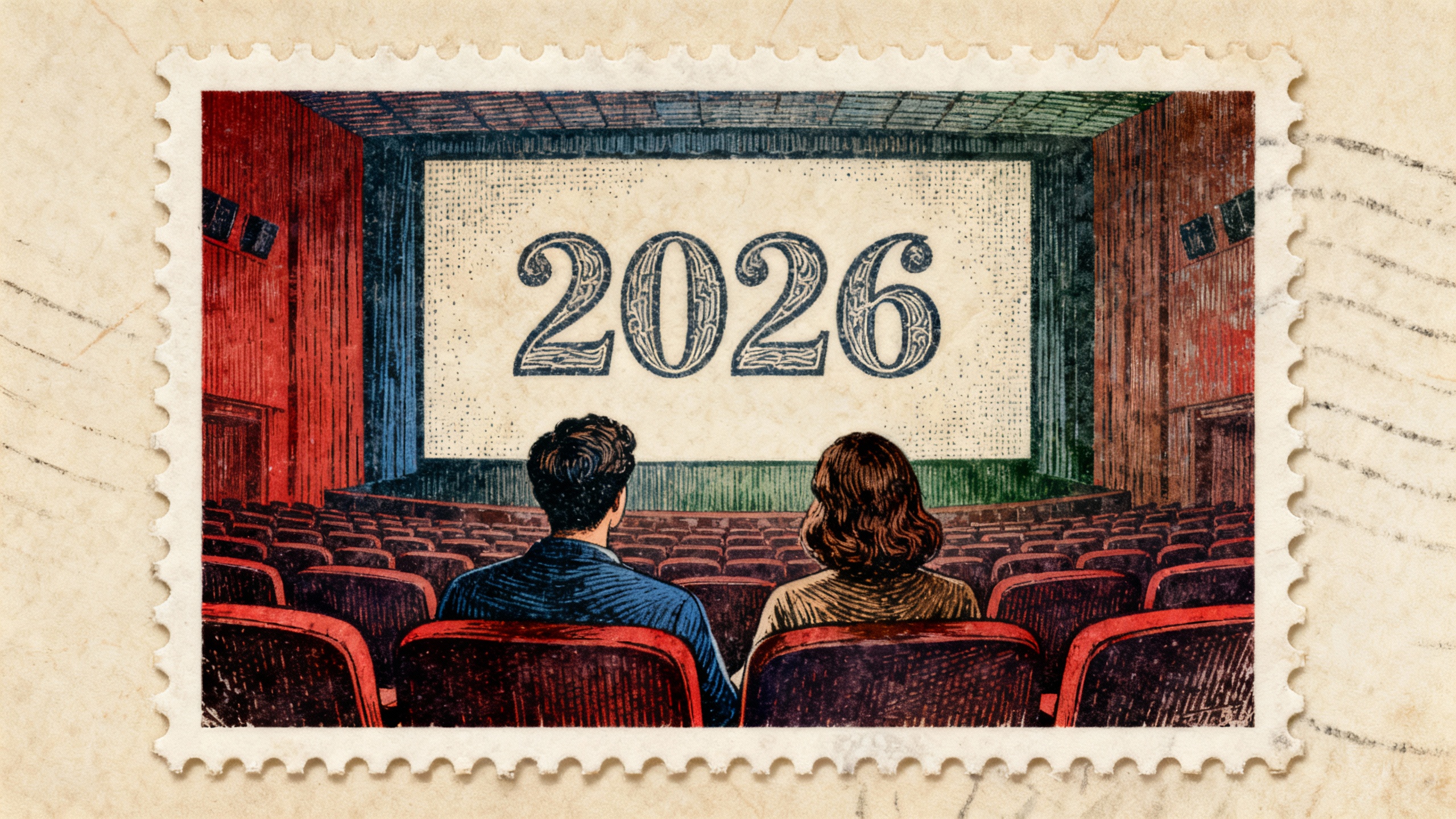
There’s a strange feeling hanging over the movie industry as it moves toward 2026. Not panic. Not excitement. Something closer to the dizzying kind, where you've climbed too high, looked down, and convinced yourself the ground isn’t really that far away. It’s a sensation of disorientation, not unlike the one we explored in our piece on Vertigo—only this time, it’s the industry itself that’s spiraling, unsure whether to come down or keep climbing, even as the foundation beneath it quietly shifts.
If you look only at the release calendar, 2026 seems poised to be a monument to cinema’s supposed resilience. Massive budgets, legacy franchises, billion-dollar expectations, an overwhelming amount of scale. But for all its surface confidence, the year already feels less like a renaissance and more like a nervous performance. Not a return to form, but a desperate attempt to reassert relevance through noise.
This isn’t the industry rebuilding. It’s the industry compensating.
A Year That Feels Like a High-Stakes Bluff
It’s telling that the two most heavily anticipated releases of the year—Avengers: Doomsday and Christopher Nolan’s The Odyssey—aren’t just films. They’re litmus tests. Markers of where the culture is willing to go, and what we’re no longer buying.
Marvel’s December tentpole arrives as less of a celebration and more of a referendum: not just on superhero cinema, but on the very mechanics of long-form franchise storytelling. After years of connective tissue and multiverse charts, the question no longer seems to be whether fans will show up, it’s whether anyone outside of them still cares.
Marvel, acutely aware of this, is clearly hedging its bets. Familiar faces have been brought back into the fold. The stakes have been raised. The marketing suggests finality, or at least significance. But the more a franchise insists it still matters, the more it reveals just how precarious its cultural hold has become. We’ve moved from collective anticipation to collective fatigue, a slow erosion that no trailer can reverse.
By contrast, Nolan’s The Odyssey arrives with a very different kind of pressure. There’s a defiance in it, a classical adaptation at epic scale, in an era where many audiences barely finish a movie without checking their phone. It feels like Nolan is still fighting for the idea that theatrical spectacle can be high art. But even that romanticism now feels fraught. If this project succeeds, it will be hailed as proof that ambition still matters. If it doesn’t, the signal will be much louder: that not even our most respected auteurs are immune to the gravitational pull of audience indifference.
What connects both projects is their awareness of the stakes. Neither feels casual. Neither feels joyful. They feel strategic, heavy, anxious.
The Slow Quiet of Franchise Fatigue
If there’s a lesson the industry still hasn’t absorbed, it’s that fatigue doesn’t arrive with a dramatic rejection. It arrives silently. A thinning of excitement. A long tail of indifference.
Yes, there are still familiar names dotting the calendar—Spider-Man: Brand New Day, Supergirl, Toy Story 5, Minions 3, yet another Hunger Games prequel (Sunrise on the Reaping). But what binds them isn’t just their IP status. It’s their lack of urgency. The question is no longer “will they make money?” Most of them will. The more interesting, and uncomfortable, question is: will anyone care two weeks later?
Take Toy Story 5. Once the crown jewel of emotional storytelling in animation, the franchise now feels like it’s caught in a loop, chasing diminishing returns with increasingly redundant sentimentality. The risk isn’t just that the story has ended already, it’s that the end has now been reversed so many times that the sincerity has been drained dry.
The Hunger Games, too, returns to a world that once felt sharply reflective of a generation’s anxiety. But in 2026, the dystopia doesn’t feel symbolic anymore. It feels like background noise. Another origin story. Another expansion pack. The problem isn’t overexposure, it’s that none of these additions seem to deepen the emotional well. They're just... there.
And then there's Star Wars.
It’s remarkable, and maybe a little damning, how quiet the discourse has been around the new Star Wars film slated for May 2026. Once the gravitational center of moviegoing culture, the franchise now moves with the uneasy inertia of something that knows it can’t afford another stumble, but also doesn’t know how to truly evolve. That silence around it? That’s not anticipation. That’s ambivalence. And in Hollywood, that’s the most dangerous response of all.
As we wrote in Has Hollywood Run Out of Ideas?, Hollywood isn’t out of ideas, it’s just stuck recycling familiar ones because the system rewards safety over originality.
Original Films Are Still Here - But They’re Treated Like Experiments
It would be a mistake to say originality has disappeared. But it has become harder to find, and even harder to trust.
Project Hail Mary, based on Andy Weir’s novel, might be the rare exception that proves the rule. It has no franchise baggage, no existing cinematic world to plug into. Just a well-constructed sci-fi premise, a singular narrative arc, and the burden of proving that audiences still want to explore new frontiers. Its reception will be read not just as a box office result, but as data, used by studios to gauge whether it's still safe to invest in stories that don’t come pre-packaged.
Maggie Gyllenhaal’s The Bride! occupies an interesting middle ground. Drawing from Frankenstein mythology while reshaping it through a contemporary lens, it naturally echoes last year’s renewed fascination with Frankenstein stories. This isn’t nostalgia for its own sake, but a recurring obsession with creation, responsibility, and unintended consequences. Themes that feel increasingly relevant in an industry obsessed with scale and speed.
The smaller, weirder films, like Sam Raimi’s Send Help, are still quietly being made. But they’re increasingly orphaned in a system that no longer knows how to nurture slow-burn success. What once would’ve been called “cult classics in the making” are now treated as rounding errors.
And that shift isn’t driven by audiences. It’s driven by impatience.
Aronofsky’s AI Project: Where Innovation Becomes Abdication
Perhaps nowhere is the anxiety of 2026 more crystallized than in Darren Aronofsky’s On This Day… 1776, an “AI-guided” experimental series that has drawn both curiosity and backlash. On the surface, it presents itself as avant-garde, a provocation about history, memory, and narrative form. But underneath that posturing is a deeper discomfort.
It’s not just the technology that feels suspect. It’s the motivation.
This isn't about using AI to enhance art. It’s about allowing AI to shape the very act of creation. And in a filmmaker like Aronofsky, whose best work has always been rooted in visceral, imperfect human extremes, there’s something hollow in outsourcing intuition to an algorithm. The result isn’t eerie or challenging. It’s antiseptic. You can feel the absence of the artist, even as his name remains on the credits.
The project is less an experiment and more a surrender. Not to technology, but to a market logic that prioritizes novelty over authorship.
AI isn’t dangerous because it creates. It’s dangerous because it mimics. And the more indistinguishable those two things become, the less art feels like it has a soul.
A Year That Might Reveal What the Industry Doesn’t Want to Admit
So what does 2026 really represent? A comeback? A renaissance?
Not quite. If anything, it feels like a year built on noise, on scale, spectacle, saturation. But what lingers isn’t excitement. It’s fatigue. A creeping realization that bigger isn’t feeling like better anymore.
The danger isn’t that cinema will collapse. It won’t. But it might continue drifting further away from what made it meaningful: the sense that a story, even a simple one, could matter to someone. Not because of its scale, but because of its truth.
And that’s what this year may ultimately expose. Not a crisis of technology. Not even a crisis of business. But a crisis of trust, between creators and studios, studios and audiences, audiences and the very idea of cinema as a shared experience.
There’s still time to course-correct. To slow down. To tell fewer stories, more carefully. But the question, maybe the only one that matters now, is whether anyone in power is still listening.
Until then, we must continue to seek out and support the Movies You Must See (MYMSee).