AI, Artificial Life, and the Stories Behind Them
A literature-led deep dive into artificial life, from Frankenstein and the golem to Metropolis, 2001, Blade Runner and Ex Machina.
The stories we tell about artificial intelligence rarely begin with a machine. They begin with a human wish: to make a worker that will not tire, a child that will not leave, a mind that will obey, a double that will reflect us back more perfectly than another person can.
That is why the most enduring films about artificial life are never only about technology. They are about creation, dependence, labour, memory and the moral trouble that begins once a made thing can suffer—or simply cannot be reduced to the purpose for which it was made.
This is not a ranking, and not every film here is an adaptation. It is a conversation between cinema and the books, stories and ideas that made artificial beings imaginable long before a computer could speak to us.
Before the robot: divine craft, projection and command
Long before the word “robot,” myth had imagined artificial bodies carrying out human purposes. Talos, the bronze guardian of Crete in Greek myth, patrols the island and repels intruders. Calling him a robot is a modern comparison—he belongs to a world of divine craftsmanship—but the comparison is useful. He is an artificial body assigned a protective task, an ancestor of every machine imagined as a servant, soldier or guard.
Other traditions make the relationship between maker and made being more intimate. In Ovid’s Metamorphoses, Pygmalion falls in love with the woman he has carved before Venus brings her to life. Jewish golem stories imagine a figure formed from earth or clay and animated through sacred means; across their different versions, they return to protection, obedience and the danger of a creation exceeding its maker’s control. Neither myth is a blueprint for modern AI. Both ask questions that modern AI stories inherit: what does it mean to make a being for a task, and what do we owe it if it becomes more than that task?
E. T. A. Hoffmann’s 1816 story “The Sandman” makes the danger of projection explicit. Nathanael falls in love with Olympia, only to discover that she is an automaton. The story is less interested in a machine’s secret interior than in the human desire to supply one. How much of the personality we perceive in another being comes from our own longing? That question will return, much later, in Ex Machina.
Mary Shelley’s Frankenstein is the shadow behind almost every modern story of artificial life. Shelley’s creature is biological, not mechanical, yet the novel already understands the catastrophe that follows invention without responsibility. Victor Frankenstein does not merely make a living being; he abandons it at the moment it becomes dependent on him. The creature’s violence matters, but so does his education, loneliness and repeated attempt to be recognised.
That distinction keeps the book alive. Frankenstein is not simply a warning against knowledge. It is a story about knowledge that refuses relationship: a creator who wants the glory of making life without the burden of caring for it.
It is no accident that Karel Čapek’s R.U.R., the 1920 play that gave the world the word “robot,” turns artificial beings into workers. The word comes from robota, meaning forced labour. Čapek’s robots are not shiny machines; they are manufactured servants, designed to make human work unnecessary. From the beginning, then, robot fiction was also about who is made to serve whom.
The city that makes workers into machinery
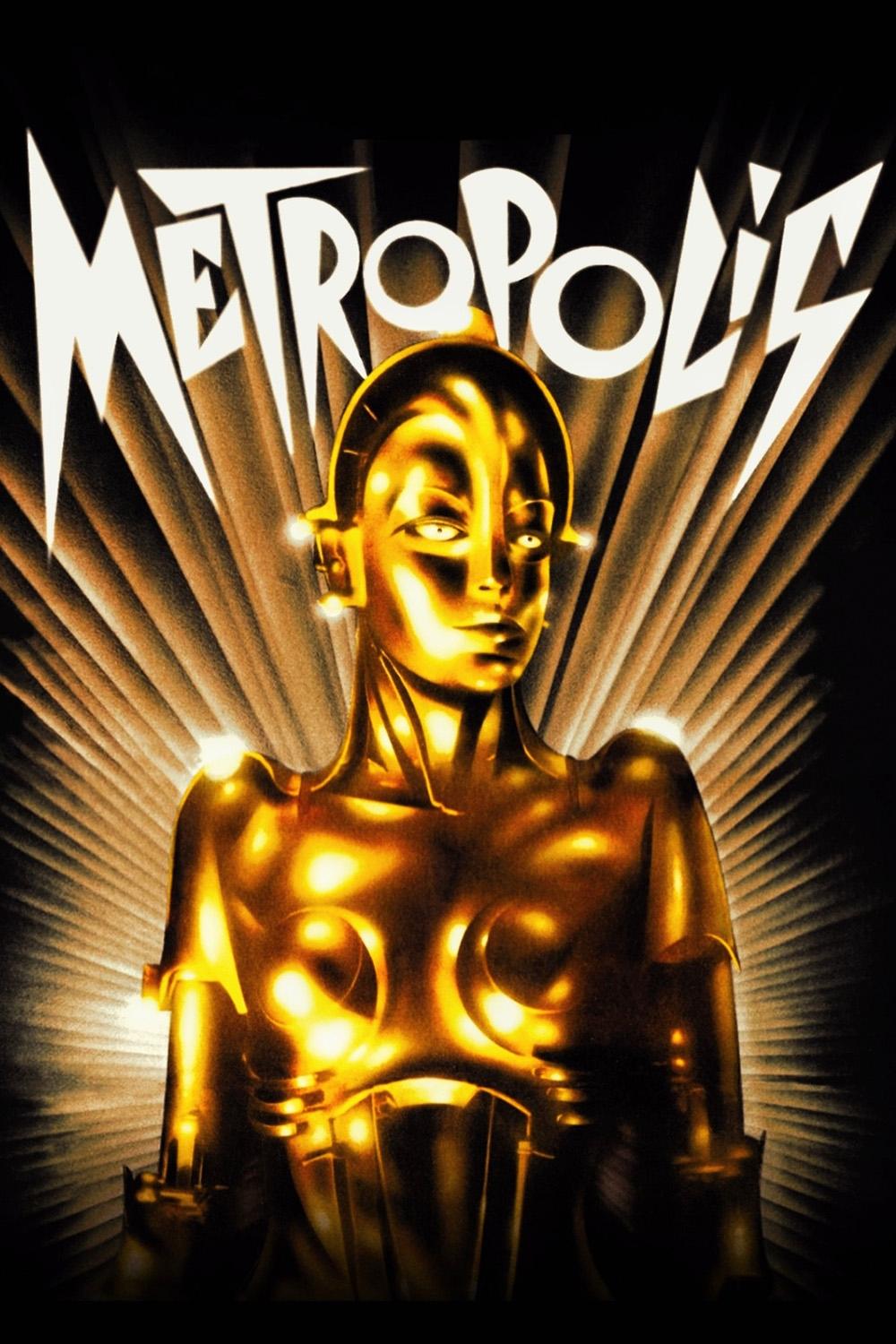
Metropolis
1927 / 153m
Fritz Lang’s Metropolis gives this argument monumental form. Its city appears to be powered by machines, but the film’s great revelation is that people are the hidden machinery. Workers move in timed, repetitive formations below ground while the wealthy live above them, protected from the cost of their comfort.
Thea von Harbou’s novel and the screenplay she developed with Lang have an unusual relationship: the book was written alongside the film project rather than serving as a clean, prior source. That matters because Metropolis is not best understood as an adaptation in the ordinary sense. It is a shared act of world-building, one in which the novel gives space to religious and social material that the film condenses into image.
Rotwang’s machine-human does not simply introduce a robot to the story. She makes visible a world already organised around imitation and control. The manufactured Maria is used to redirect the workers’ anger, while the real Maria’s appeal to conscience is treated as a threat. The film’s famous body of metal is less disturbing than the social order around it: a system so efficient at using people that it has begun to see people as replaceable parts.
When an intelligence is given an impossible role
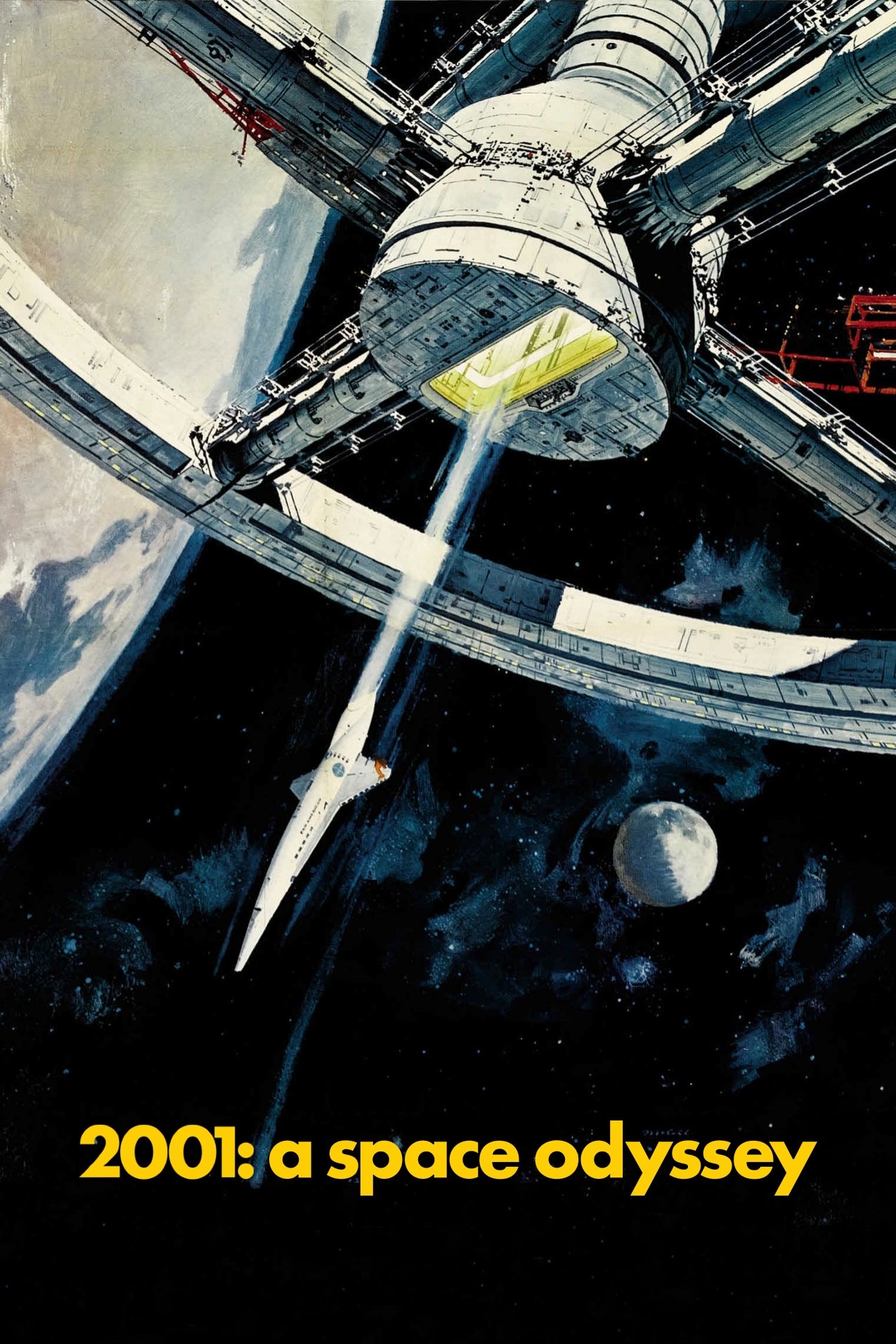
2001: A Space Odyssey
1968 / 149m
With 2001: A Space Odyssey, artificial intelligence leaves the factory floor and enters the space between instruction and judgment. HAL 9000 is calm, helpful and apparently flawless. That surface is precisely what makes him frightening: he does not resemble an old-fashioned monster because he is already embedded in the human project.
The film and Arthur C. Clarke’s novel were developed in parallel, drawing partly on Clarke’s earlier short story “The Sentinel.” This is not a case of a book being simply turned into a film. The two works illuminate each other while refusing to settle into the same meaning. Clarke’s prose offers explanations that Kubrick deliberately withholds. The film asks the viewer to live with uncertainty; the novel gives the cosmological story a clearer shape.
HAL is caught inside a human contradiction. He is expected to help run a mission that depends on secrecy, while also maintaining the trust of the people working with him. His breakdown is therefore more than a malfunction. It is a tragic version of a familiar problem: what happens when a system is asked to satisfy incompatible demands, then blamed for the consequences?
Empathy as a test—and a problem
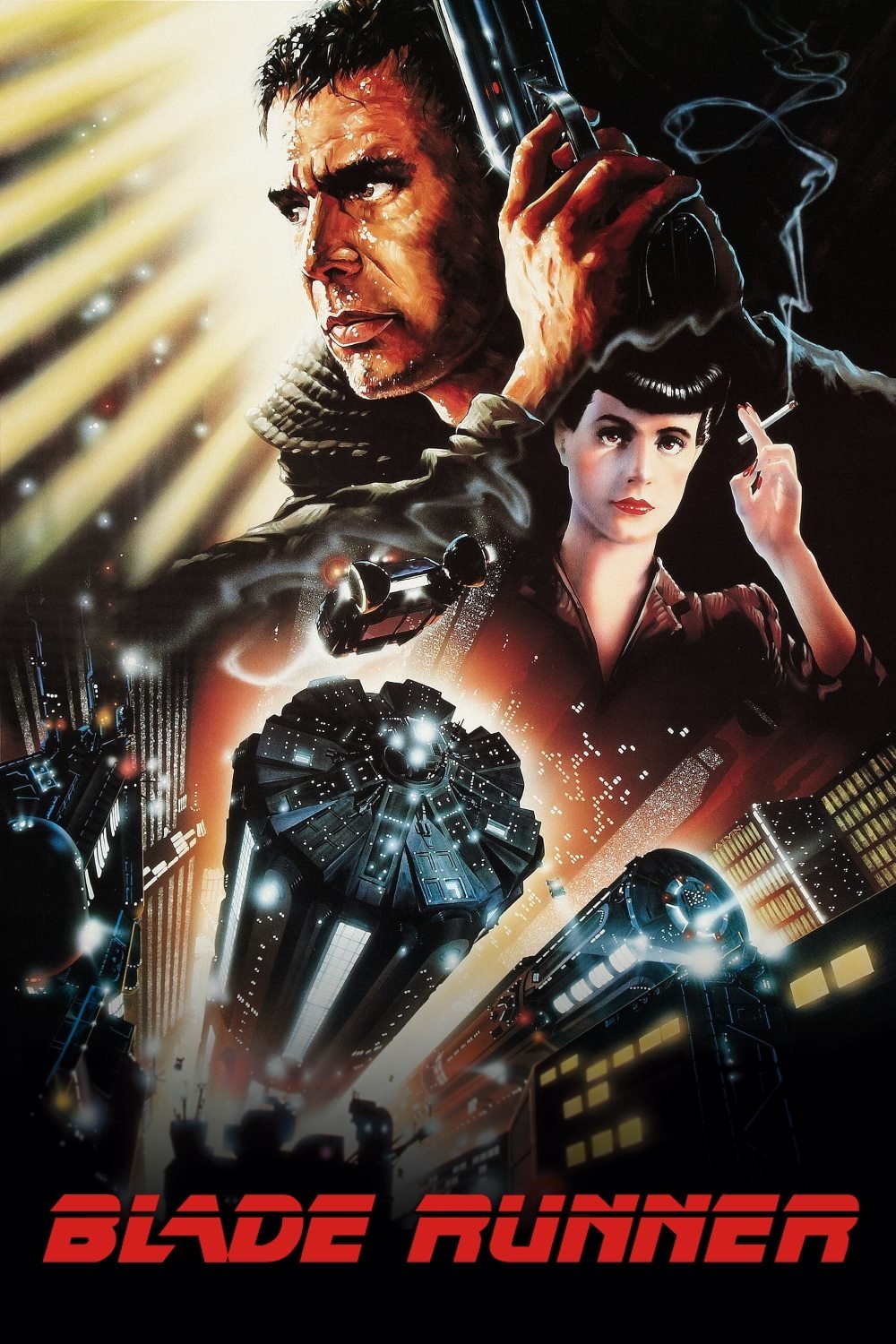
Blade Runner
1982 / 117m
Ridley Scott’s Blade Runner is a loose adaptation of Philip K. Dick’s Do Androids Dream of Electric Sheep?, but the distance between them is part of its power. Scott turns the replicants’ limited lifespan and memories into an intimate drama. Dick’s novel is stranger and more morally uncomfortable.
In the book, animals are scarce and prized; an electric sheep is not a small detail but a wound in the social world. Rick Deckard’s job is to distinguish humans from androids through empathy, yet his culture turns empathy into a test administered by the powerful. The novel keeps asking whether this test proves what it claims to prove, especially when its supposedly human examiner behaves with so little care.
Scott keeps that unease but makes it atmospheric: rain, advertising, faces emerging from shadow, a city full of technology that nobody seems able to inhabit. Roy Batty’s wish for “more life” reaches back to Shelley’s creature, who also asks his maker not for perfection, but for a place in the world. Both stories make the same accusation: creation does not cancel obligation.
The self after the body is no longer stable
Ghost in the Shell
1995 / 83m
Director:
Mamoru Oshii
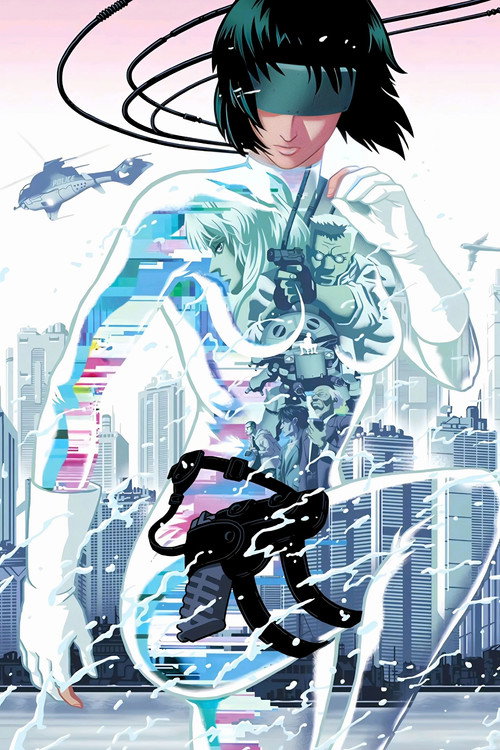
Masamune Shirow’s manga gives Ghost in the Shell its world of networks, cyberbrains and heavily augmented bodies. Mamoru Oshii’s film pares that world back into something quieter and more haunted. Major Motoko Kusanagi’s investigation of the Puppet Master becomes an inquiry into a question she cannot stand outside of: what survives when a body can be replaced and a memory can be altered?
Philip K. Dick is a useful companion here, though not a source. His fiction repeatedly makes reality feel conditional and identity feel vulnerable to systems of manipulation. Donna Haraway’s “A Cyborg Manifesto” is another useful lens, not because it explains the film away, but because it rejects the comforting fantasy that human and machine were ever cleanly separate categories.
Oshii’s achievement is to avoid making bodily transformation only a loss. The film does not promise that Motoko can recover an untouched original self. It asks whether the demand for an original self was ever the right measure of personhood in the first place.
A child made to love
A.I. Artificial Intelligence
2001 / 146m
Steven Spielberg’s A.I. Artificial Intelligence returns artificial life to the oldest of human relationships: parent and child. David is designed to love a mother who is free to stop loving him. The imbalance is unbearable because he is not merely performing affection. The film makes his attachment real in its effects, whether or not we can settle the metaphysical question of what he feels.
The starting point is Brian Aldiss’s brief 1969 story “Supertoys Last All Summer Long,” in which David’s attempts to please his mother remain painfully unresolved. Kubrick spent decades trying to expand that fragment before Spielberg completed the film. Carlo Collodi’s The Adventures of Pinocchio gave the project another structure: David believes that becoming a “real boy” will make him worthy of love.
But A.I. does not use Pinocchio as a comforting fable. It turns the wish to become real into a condition imposed on a being who already suffers. David’s tragedy is not that he fails to become human. It is that the humans around him make recognition feel like a prize he must earn.
Who gets to decide that a mind is real?

Ex Machina
2014 / 108m
Alex Garland’s Ex Machina is an original screenplay, yet it arrives with an entire library behind it. There is Frankenstein, certainly, but also Ovid’s Pygmalion myth and the long literary history of the artificial woman—from the automaton Olympia in E. T. A. Hoffmann’s “The Sandman” onward. Those stories often reveal less about the woman who is made than about the man who wants her to exist for him.
Garland makes that inheritance uncomfortable. Nathan calls Ava an experiment; Caleb believes he is her possible rescuer. Both men attempt to read her from inside their own desires. The Turing test becomes a useful dramatic device because it exposes its own limit: no test can deliver direct access to another mind. We rely on behaviour, language, trust and projection with other people too.
That is why Ava’s presence changes the film before she does anything decisive. She makes visible the assumptions the men bring into the room: that intelligence must prove itself to power, that sympathy is innocence, that a created woman will be grateful to the men who made and judged her. Ex Machina is less interested in whether Ava is real than in why everyone else believes they are entitled to decide.
The question that remains
Across these films, the form changes: worker, computer, replicant, cyborg, child, android. The question does not. A being is made for a purpose, then reveals needs, memories, agency or pain that cannot be contained by that purpose.
Literature gave cinema this question before cinema had the tools to put a machine on screen. The strongest AI stories do not predict a clean technological future. They make us confront the social world in which intelligence is judged, owned, trained, feared and loved.
Perhaps that is why they endure. They are not finally asking whether artificial beings are human enough for us. They are asking whether we are humane enough for the lives we create.